 GreyMuzzle
How to Help a Dog with Arthritis at Home (What Actually Worked for Us)
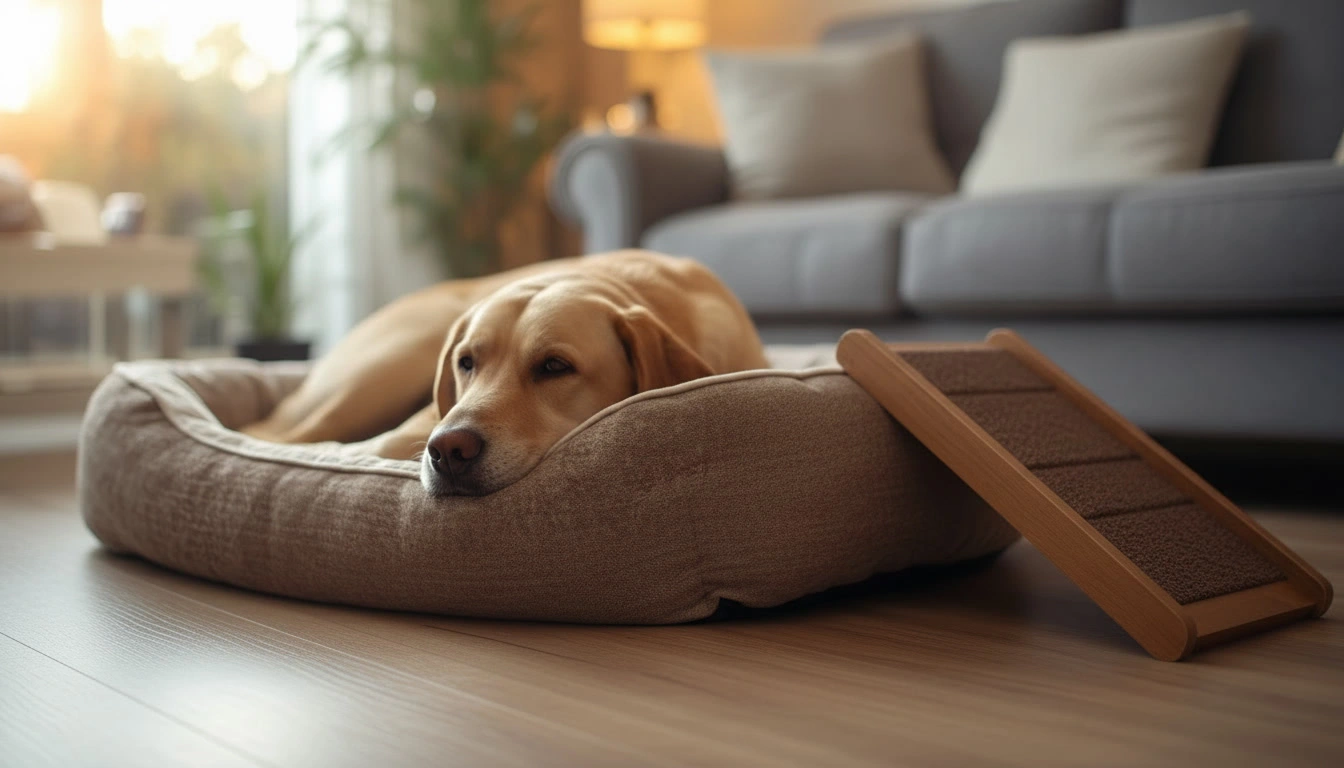
One stiff Tuesday morning, my dog Rusty couldn't get up right away. That was my first real sign of arthritis. Here's everything that's actually helped — the home fixes, the supplements that worked (and the one that didn't), and the mistakes I made along the way.
There was a morning about a year ago when my dog Rusty just... didn't get up. Not in a scary way, more like he tried, winced, and laid back down. I stood there in my pajamas, coffee in hand, genuinely panicking for a second before he finally pushed himself up, shook it off, and waddled to his food bowl like nothing happened.
That was my first real introduction to dog arthritis. Not a dramatic vet appointment. Just a slow, stiff, very unglamorous Tuesday morning — around the same time I started noticing other signs that Rusty was becoming a senior dog, so the two ended up going hand in hand for us.
If you're here, chances are you've had a similar moment. Maybe your dog hesitates before jumping on the couch now. Maybe they take the stairs one at a time instead of bounding up like they used to. And now you're wondering what you can actually do about it, at home, without breaking the bank on every product with "joint support" slapped on the label.
I've been managing Rusty's arthritis for over a year now, with a lot of trial and error along the way. Here's everything that's actually made a difference, plus the stuff that was a waste of money.
Wait, Does My Dog Actually Have Arthritis?
Quick reality check before we get into solutions. Arthritis in dogs is basically the same as in humans — the cartilage cushioning the joints wears down over time, and the joint gets inflamed and stiff. It's incredibly common in older dogs, but it also shows up early in larger breeds or dogs with old injuries.
Signs I noticed with Rusty, roughly in order:
Stiffness after naps or first thing in the morning. Slower to get up, and a weird "testing it out" walk for the first few steps.
Reluctance to jump into the car or onto furniture, even though he used to do it without thinking.
Less interest in long walks, or wanting to stop and rest partway through.
Occasional limping, especially after a longer or more active day.
Licking at a specific joint, which I honestly missed for a while because I thought he was just grooming.
None of these things scream "emergency," which is exactly why arthritis gets missed so often. It's a slow burn, not a sudden injury.
If some of this sounds familiar but you're not sure whether it's arthritis or just general aging, it's worth reading through the early signs of a dog entering its senior years too — there's a lot of overlap, and it helped me figure out what I was actually dealing with.
I want to be upfront here: I'm not a vet, and nothing here replaces an actual diagnosis. Our vet confirmed Rusty's arthritis with a physical exam and some X-rays, and that diagnosis is what shaped everything else we did. If you suspect your dog has joint pain, get it checked before assuming and self-treating.
What Actually Helped (Step by Step)
Step 1: Get a Real Diagnosis First
I know it's tempting to just start buying supplements and hoping for the best. I get it. But limping can mean a dozen different things — a torn ligament, a thorn stuck in a paw, arthritis, even something neurological in rare cases. Our vet ruled out other stuff before we committed to an arthritis management plan, and that mattered.
X-rays confirmed mild-to-moderate arthritis in Rusty's hips and one knee. Knowing exactly where the problem was helped us target things instead of guessing.
Step 2: Adjust the Home Environment
This was the single biggest win for us, and it's basically free.
We added a ramp for the car (a folding one, easy to store in the trunk) instead of expecting him to jump up. Cost about $40 and honestly should've bought it sooner.
Switched his old flat bed for a memory foam orthopedic dog bed. The difference in how he gets up in the morning is noticeable — less of that stiff, creaky start to the day.
Added yoga mats and rugs across our hardwood floors. Slippery floors are brutal on arthritic joints because the dog's legs are constantly working to stabilize instead of just walking normally. This one sounds minor, but it made a real difference in how confidently Rusty moves around the house now.
Got him a set of steps for the couch, since he still wants to hang out with us in the evenings but couldn't comfortably jump up anymore.
Step 3: Rethink Exercise (Don't Cut It, Adjust It)
My first instinct was to just let Rusty rest more, thinking exercise would make things worse. Turns out that's actually backwards. Moderate movement helps keep the joints from stiffening up further and helps maintain muscle mass, which supports the joints.
What we changed: shorter, more frequent walks instead of one long one. Two 15-minute walks instead of one 40-minute one.
Flat, soft terrain over pavement when possible. Grass and dirt trails are easier on the joints than concrete.
Swimming, when we can get to it. We don't have a pool, but there's a dog-friendly lake near us, and swimming is close to a perfect low-impact workout for arthritic dogs. Fifteen minutes of swimming tires him out way more than a walk, with none of the joint pounding.
Avoiding repetitive jumping or hard stops, like fetch on hard ground. We still play fetch, just on grass, and I roll the ball instead of throwing it super far.
Step 4: Weight Management
This one felt obvious once someone pointed it out, but I hadn't really thought about it before. Extra weight puts extra strain on already struggling joints. Our vet actually recommended getting Rusty slightly leaner than his "normal" adult weight, specifically because of the arthritis.
We switched his food portions down slightly and cut out the daily biscuit treats, swapping in small pieces of baby carrots instead. He didn't seem to notice the difference, honestly, which surprised me.
Step 5: Supplements (What Worked, What Didn't)
We use a glucosamine and chondroitin chew (we went with Cosequin, though there are a few reputable brands). It took about 6 to 8 weeks before I noticed a real difference in his morning stiffness, so patience matters here — it's not an instant fix.
We also added an omega-3 fish oil supplement, which has some evidence behind it for reducing joint inflammation. We use one specifically formulated for dogs rather than a human fish oil capsule, since dosing is different.
What didn't do much for us: a CBD-based chew we tried for a couple months. Maybe it works for some dogs, but we honestly didn't notice a clear difference, and it wasn't cheap. I'm not saying it's useless across the board, just that it wasn't our win.
Step 6: Vet-Prescribed Pain Management
For the harder days, our vet prescribed an anti-inflammatory medication specifically made for dogs. I want to be really clear here: never give a dog human pain medication like ibuprofen or Tylenol. It can be toxic, even fatal, to dogs. This is one area where DIY is genuinely dangerous.
The prescription option our vet gave us made a visible difference on Rusty's tougher days, especially after a longer hike or a cold, damp morning.
Step 7: Heat and Massage
On cold mornings, we use a heating pad made specifically for pets (never a human heating pad, since those can overheat) under his bed for about 15 minutes before he gets up. It seems to loosen him up.
I also started doing short, gentle massages on his hips and shoulders, just a few minutes while we watch TV. I looked up a basic canine massage tutorial on YouTube to make sure I wasn't doing anything wrong, and it's become a nice bonding thing for both of us, not just a treatment.
Mistakes I Made Along the Way
I assumed rest was always better than movement, and ended up letting Rusty get stiffer and weaker for a few weeks before learning that moderate exercise actually helps.
I bought a cheap ramp with a slick surface, and Rusty refused to use it because it felt unstable under his paws. Had to return it for a textured, grippier one.
I gave supplements for two weeks, decided they "weren't working," and stopped. Turns out most joint supplements need at least a month or two before you'll notice anything.
I let the slippery floor situation go on way too long before adding rugs, not realizing how much it was affecting his confidence and gait.
A Realistic Expectation
Arthritis isn't something you cure. It's something you manage. Some days Rusty moves almost like his old self. Other days, especially when it's cold or rainy, he's noticeably stiffer, and that's okay. The goal isn't perfection, it's comfort and quality of life.
If your dog is showing signs of joint stiffness, don't wait it out hoping it resolves on its own. Get a vet's opinion, then start layering in the small home changes. None of it is complicated or expensive on its own, but together it adds up to a dog who's a lot more comfortable getting through their day.
Rusty still greets me every morning, just a little slower now, with a little more stretching involved. But he still greets me. And these days, that stiff old wag of his tail means just as much as the full-speed one used to.