 GreyMuzzle
Senior Dog Diet: What Changes as Dogs Age (Lessons From Feeding an Older Dog)
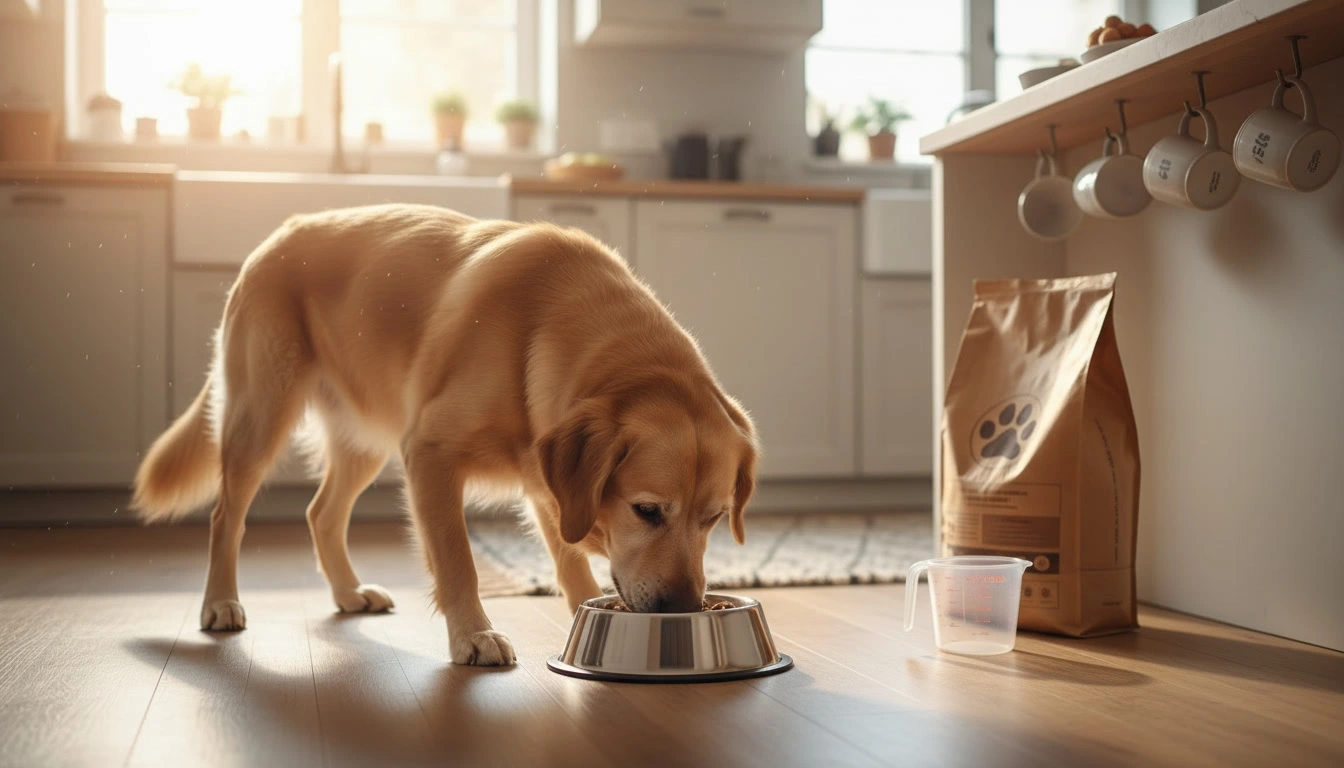
I picked up my dog for his usual weigh-in and realized he'd gained six pounds — without me changing a thing about his food. That's when I learned senior dogs need a completely different approach to diet. Here's everything that actually worked, and the mistakes that got us there.
A few months after Rusty turned 8, I stepped on the bathroom scale holding him, the way I always did, and did the math. He'd gained almost six pounds. Six pounds doesn't sound like much until you realize that's roughly the equivalent of a grown man gaining 30 or 40 pounds. I hadn't changed anything about his food. I was just... still feeding him like he was 4.
That was my wake-up call that senior dogs don't just need less energy or slower walks — they genuinely need a different approach to food. I didn't know that going in, and I made a handful of mistakes before I got it right.
If your dog is starting to show signs of aging (gray muzzle, slower walks, sleeping more) and you're wondering whether their diet needs to change too, short answer: probably yes. Here's what I learned, what actually worked, and what I wish someone had told me sooner.
Related read, if you haven't already checked it out: signs your dog is entering its senior years — a lot of the diet stuff below only clicked for me once I recognized those signs in Rusty.
Why a Senior Dog's Nutritional Needs Actually Change
This part surprised me. I assumed "senior dog food" was mostly a marketing gimmick, like senior discounts at a diner. Turns out there's real physiology behind it.
Older dogs tend to burn fewer calories because they're less active and their metabolism naturally slows down. Feed them the same amount as their younger selves, and the extra calories turn into weight gain, which is exactly what happened with Rusty.
At the same time, older dogs often need more protein, not less, to help maintain muscle mass. This one confused me at first because I'd heard the opposite advice for years — lower protein for older dogs. Our vet actually cleared that up: the old "low protein for seniors" advice mostly applied to dogs with kidney disease, not healthy aging dogs in general. Most healthy senior dogs actually benefit from good quality protein to fight age-related muscle loss.
Digestion also gets a little less efficient with age, so fiber and easily digestible ingredients start to matter more. And joint health becomes a bigger deal, which is where you start seeing glucosamine and omega-3s show up in senior formulas.
The Changes We Actually Made (Step by Step)
Step 1: Talked to the Vet Before Changing Anything
I know it's tempting to just grab a bag labeled "senior" off the shelf and call it a day. I did exactly that at first, and it wasn't a total disaster, but it also wasn't the best fit for Rusty specifically.
Our vet looked at his weight, activity level, and the mild arthritis he'd been diagnosed with, and recommended a food built around joint support and lean muscle maintenance rather than just "lower calorie." Every dog's situation is a little different, so this step matters more than people think.
Step 2: Switched Foods Gradually
My first attempt at switching his food was way too fast, and Rusty had a rough few days of stomach upset because of it. Lesson learned: senior dogs (like most dogs) need a gradual transition, ideally over 7 to 10 days.
Here's the rough breakdown I use now when switching foods:
Days 1–3: 75% old food, 25% new food. Days 4–6: 50/50 mix. Days 7–9: 25% old food, 75% new food. Day 10 onward: fully switched.
If you notice loose stool or your dog seems uncomfortable at any stage, just slow it down further. There's no prize for switching fast.
Step 3: Adjusted Portion Sizes, Not Just Food Type
This was the actual fix for Rusty's weight gain, more than the food switch itself. We recalculated his daily calorie needs with our vet's help, and it turned out I'd basically been feeding him the same portion since he was 3 years old, without ever adjusting.
We dropped his portions by about 15%, split across two meals instead of one big one. Smaller, more frequent meals also seem easier on his digestion these days.
Step 4: Added Fiber-Friendly, Digestible Ingredients
We started incorporating small amounts of plain canned pumpkin (not pie filling, just the plain stuff) into his meals a few times a week. It's a small thing but genuinely helped with occasional digestive sluggishness he started having.
We also switched to a food with easily digestible protein sources, since we noticed he was having more gas and looser stools than usual on his old food, likely just his gut being a bit less efficient than it used to be.
Step 5: Prioritized Joint-Supportive Nutrition
Since Rusty's dealing with mild arthritis (I wrote a whole separate post about how we manage that day to day: how to help a dog with arthritis at home), we specifically looked for food with glucosamine, chondroitin, and omega-3 fatty acids built in, rather than relying purely on separate supplements.
We ended up on Hill's Science Diet Senior for a while, then moved to Purina Pro Plan Bright Mind Senior when we wanted something with added cognitive support too, since he'd started having a few "spacey" moments. Your vet can help match the right brand to your dog's specific needs rather than guessing.
Step 6: Watched Hydration More Closely
This one I genuinely didn't expect. Older dogs can be more prone to mild dehydration, partly because thirst signals get a little less sharp with age, similar to what happens in older humans. We started adding a splash of water or low-sodium bone broth to his dry food, partly for hydration and partly because it makes the food more appealing if his appetite is a little lower on a given day.
Step 7: Started Tracking Weight and Body Condition Monthly
I use the same bathroom-scale trick I mentioned in an earlier post — weigh yourself holding the dog, then subtract your own weight. I do this roughly once a month now and log it in a simple notes app.
Beyond the number, I also do a quick "body condition check" — feeling for his ribs. You should be able to feel them without heavy pressure, but not see them prominently. If I can't feel them easily, that's my cue to dial back portions slightly.
Real Examples of What This Looks Like Week to Week
A typical day for Rusty now: half his daily food in the morning with a spoonful of pumpkin mixed in, a short walk, then the other half in the evening with a splash of warm water to soften it slightly, since his teeth aren't quite what they used to be either.
Treats got a rework too. Instead of the biscuit treats he used to get constantly, we switched to small pieces of baby carrots, green beans, or tiny bits of boiled chicken. Lower calorie, and he genuinely doesn't seem to notice the swap.
Common Mistakes to Avoid
Feeding the same portion size as when your dog was younger, without adjusting for lower activity and slower metabolism. This was my biggest one.
Switching food too fast, which almost always leads to a rough few days of stomach issues.
Assuming all "senior" labeled foods are automatically right for your specific dog. Some are lower protein than a healthy senior actually needs, so read the label or ask your vet rather than assuming the packaging knows best.
Ignoring dental issues that make eating harder. If your dog is dropping kibble or seems hesitant to chew, it might not be about the food itself, it might be about their teeth. Worth a vet check before assuming it's pickiness.
Overdoing joint supplements on top of a food that already includes them. Doubling up isn't necessarily harmful in small amounts, but it's an easy way to overspend without added benefit. Check your food's label before stacking a separate supplement on top.
Final Thoughts
Feeding an older dog isn't about switching to some "diet food" and calling it done. It's more like recalibrating, the same way you'd adjust your own eating as your activity level and body change over the years.
Rusty's at a healthy weight again now, his coat looks better, and he's noticeably more comfortable on his walks than he was during his "extra six pounds" era. None of it happened overnight, and I definitely fumbled a few steps along the way. But small, steady adjustments made a real difference, and honestly, watching him move more easily again made every bit of the trial and error worth it.
If your senior dog's diet hasn't been touched in a while, it might be worth a second look. Sometimes the biggest wins come from the smallest changes.